
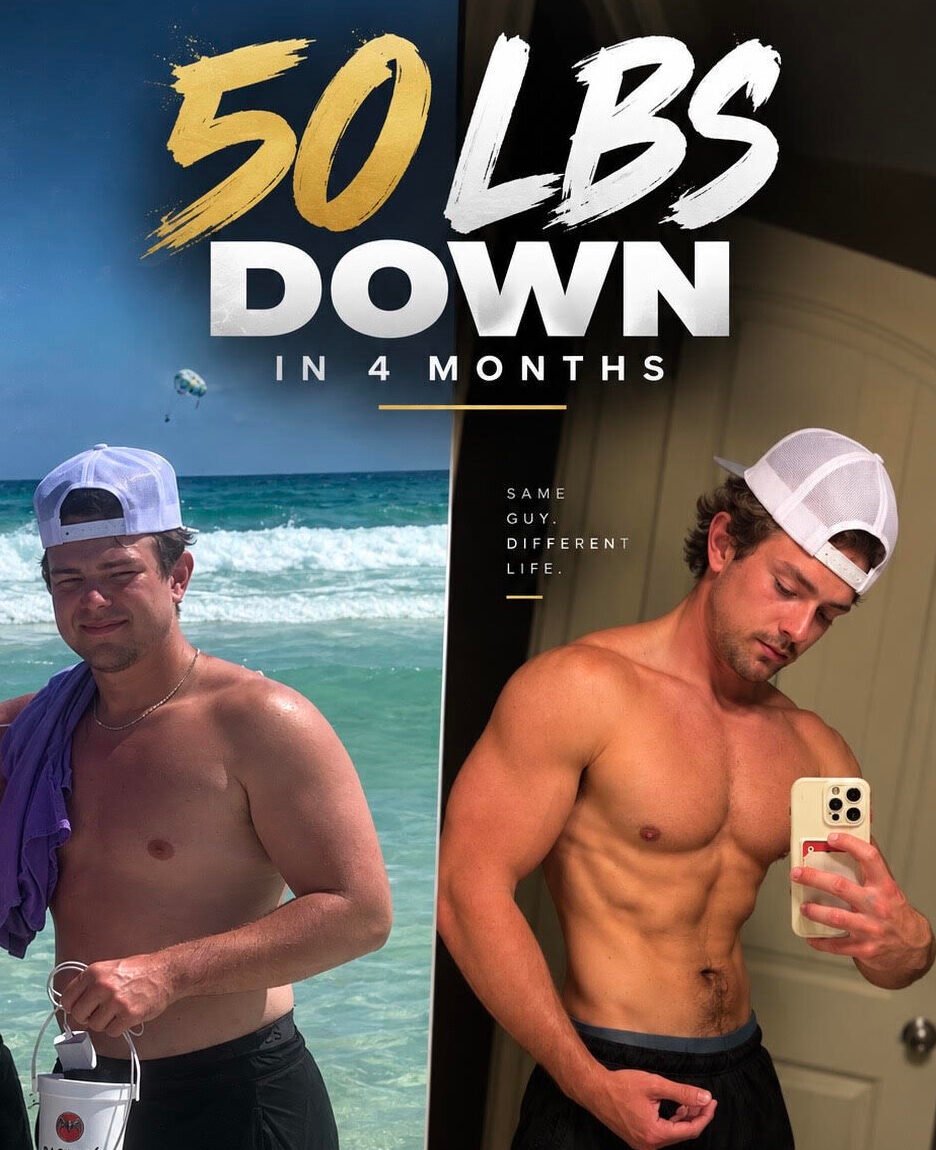

If you’ve ever struggled with binge eating, you know how frustrating the cycle can be.
You tell yourself you’re going to stick to your diet.
You do well for a few days—or maybe even a few weeks—and then one night, something happens.
You eat something you weren’t planning on eating, and suddenly one treat turns into an entire night of eating.
I’ve struggled with binge eating myself, so I understand how difficult that cycle can feel.
But here’s the good news: you can break it.
And you don’t have to completely eliminate the foods you enjoy to do it.
If you really enjoy ice cream, French fries, chocolate, or whatever your favorite foods are, you can have them in moderation, feel satisfied, and continue with your day.
I just got done having a 250-calorie dessert.
I had one, I’m satisfied, and I’m going to move on with my life.
That’s exactly where you want to be.
THE PROBLEM WITH BINGE EATING FOR FAT LOSS
Unfortunately, a lot of people don’t have that relationship with food.
They’ll tell themselves they’re only going to have one ice cream bar.
They open the box, have one, and then decide to have another.
Then another.
Before they know it, they’ve eaten several of them.
And that’s how the binge-eating cycle starts.
The problem with binge eating, especially from a fat-loss standpoint, is that you can do a lot of damage in a very short period of time.
You can spend days successfully dieting, sticking to your calories and building up a deficit, and then have one day where you just keep eating.
Before you know it, you’ve created a massive calorie surplus that can wipe out a lot of the progress you made over those previous days.
And here’s the frustrating part about fat loss:
It takes a lot longer to burn calories than it does to eat them.
You can sit down and consume 2,000 calories in a relatively short period of time.
But if those 2,000 calories are actually a surplus on top of what you needed for the day, you’d need to expend roughly that much additional energy to offset it.
That’s going to take a hell of a lot longer than it took you to eat it.
And that’s why learning how to control binge eating is so important if you’re trying to lose fat.
What Causes Binge Eating?
The first thing we need to realize is what causes binge eating.
When I was growing up as a kid and teenager, I never struggled with binge eating.
I could indulge, have treats, have this, have that, and move on with my life.
It wasn’t until I really started dieting and trying to get lean that binge eating became a thing for me.
I was doing low-carb diets, lots of cardio, and trying to keep myself in a big calorie deficit.
You see, what happened was I was starving myself.
I was going way too low with my calories.
And that’s the first thing that causes bingeing:
Extreme dieting.
There’s this idea from Newton’s law that one extreme action is always followed by another extreme action in the opposite direction.
So if you take your diet to an extreme, eventually you’re going to get a rebound.
If you diet too hard, push through the hunger, and keep forcing yourself through that discomfort, eventually it’s going to backfire.
This is human nature.
If you’re walking around starving every day, constantly thinking about food, and using all of your energy just trying not to eat, eventually it becomes harder and harder to keep doing that.
That’s what happened to me.
I would push my calories too low, do too much cardio, and try to ignore the fact that I was fucking starving.
Eventually, I would eat.
And because I had pushed myself so far in the other direction, it wasn’t always easy to just have one thing and stop.
I’d eat something, then want something else, then something else.
Before I knew it, I had gone from one extreme to the other.
That’s the problem.
You undereat for too long, eventually you overeat.
Then you feel guilty about overeating, so what do you do?
You try to undereat even harder the next day.
And now you’re right back where you started.
That’s the cycle you have to break

The Second Problem: Guilt
The second aspect of this is associating guilt with screwing up on your diet.
This is where things get really counterintuitive.
You go on a diet that’s way too extreme.
Eventually you break.
You have the ice cream bar.
You have some French fries.
Maybe you go over your calories.
And then you feel guilty about it.
You start thinking:
I shouldn’t have eaten that.
I screwed up my diet.
I have no self-control.
And that guilt can actually make the situation worse.
Instead of having the food and continuing with your day, you start beating yourself up over it.
And once you feel like you’ve already screwed up, it becomes much easier to think:
“Well, I already messed up today, so I might as well keep eating.”
That’s where the cycle gets worse.
You need to realize that you’re only human.
It’s okay to eat foods you enjoy.
It’s okay if some days you go a little over your calories.
I do this myself.
If I’m genuinely hungry and I need to eat a little more to stay satisfied, I’ll sometimes go a little higher.
That might slow down my fat loss slightly.
But I’m still moving in the right direction.
And that’s what matters.
There’s no reason to turn going a little over your calories into an entire night of eating.
If you need to go a little higher one day, go a little higher.
If you’re supposed to be in a 500-calorie deficit and you eat 200 calories more than planned, you’re still in a 300-calorie deficit.
You’re still moving toward your goal.
It might just take a little longer.
There’s no rush.
There’s a Fine Line
This is something I’ve learned through years of dieting:
There’s a fine line between being disciplined and taking your diet too far.
If you want to lose fat, you need to be in a calorie deficit.
And yes, sometimes you’re going to be hungry.
That’s part of dieting.
There are going to be times when you need to stick to your plan, accept a little hunger, and move on with your day.
But there’s a difference between being a little hungry and walking around absolutely starving every single day.
If you’re genuinely starving, sometimes eating an apple, a banana, or a couple hundred extra calories is the smarter decision.
Maybe your deficit is a little smaller that day.
That’s okay.
You’re still moving in the right direction.
The mistake is taking your calories so low, doing so much cardio, and pushing through so much hunger that eventually you snap and eat thousands of calories.
That’s what we’re trying to avoid.
You still need discipline.
You still need a calorie deficit.
You just don’t need to take that deficit to such an extreme that it becomes impossible to maintain.
That’s why when I structure a diet for myself, I don’t just think about calories.
I think about what foods actually keep me satisfied.
For me, that’s things like steak, potatoes, lots of fruit, cheese quesadillas, omelets, bread, chocolate, and desserts that I genuinely enjoy.
I’ve learned which foods make dieting easier for me.
And that’s incredibly important.
Because the goal isn’t to avoid hunger completely.
The goal is to create a calorie deficit you can actually stick to without constantly feeling like you’re one bad night away from losing control.
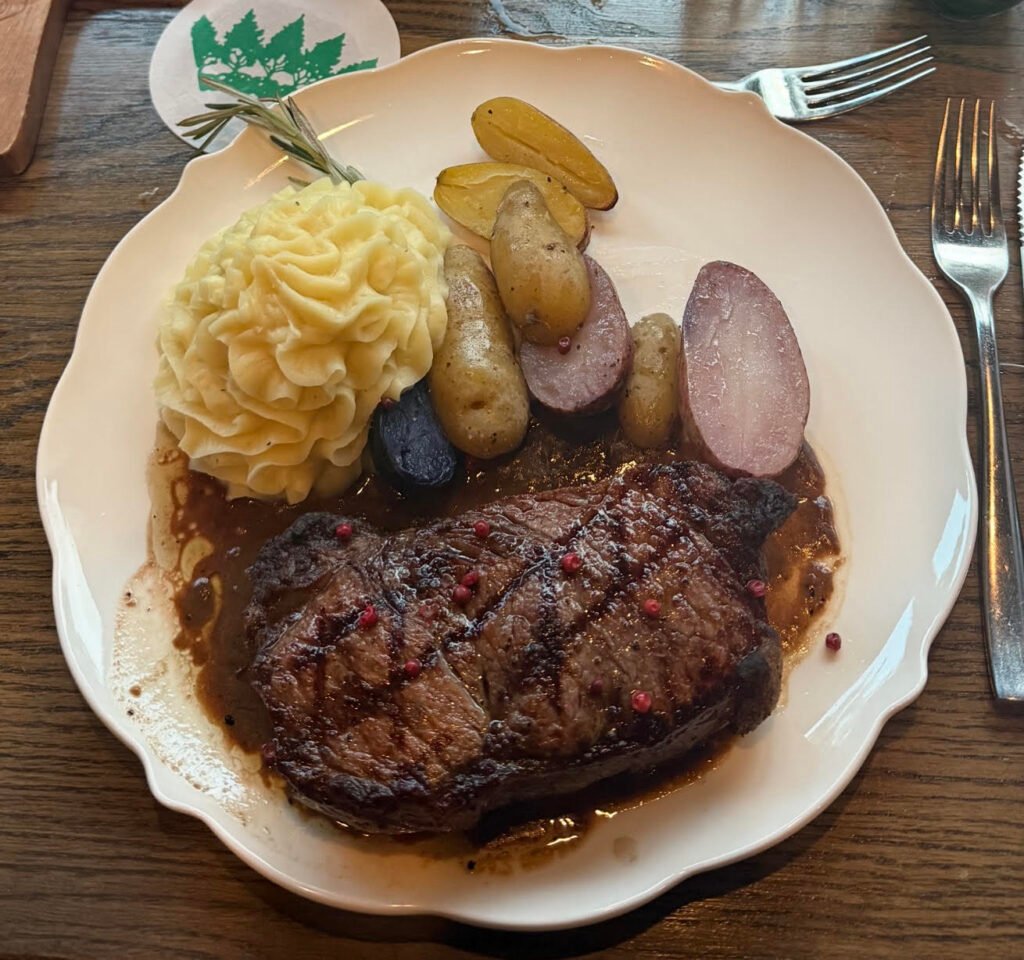
You Can Fit In the Foods You Love
You don’t have to cut out every food you enjoy just because you’re trying to get lean.
If you want to have a 230-calorie ice cream bar every night and you can fit it into your calories, there’s nothing wrong with that.
If you like potato wedges, fit potato wedges into your diet.
If you enjoy chocolate, have some chocolate.
If you have a sweet tooth and an ice cream bar satisfies that craving, have the ice cream bar.
I’ve found that certain foods can satisfy me so well that once I’ve eaten them, I’m genuinely not thinking about food anymore.
And that’s huge.
Because now I know I can have that food, enjoy it, and still get leaner.
There’s no need to turn it into a forbidden food.
I ate it.
I enjoyed it.
I’m satisfied.
That’s it.
Learn Which Foods You Can Actually Stop Eating
There’s another important piece to this:
Not every food is going to be equally easy for you to stop eating.
I’ve learned this about myself.
If I have a container of ice cream and make myself a bowl, sometimes I want to make another bowl.
If I have cookies and eat a few cookies, sometimes I want a few more.
Some foods just make you want to keep eating.
And you need to figure out what those foods are for you.
For me, I’ve found that certain individually portioned foods—like a specific ice cream bar—are much easier for me to stop eating after one.
That’s useful information.
You don’t have to completely ban every food that’s harder for you to control.
But you should know which foods those are.
Maybe you buy an individually portioned version.
Maybe you don’t keep a giant container of it sitting around the house.
Maybe you find something else you enjoy just as much that’s easier for you to stop eating.
The point is to make your diet easier to stick to.
You don’t get extra points for making this harder than it needs to be.
What Your Diet Should Actually Look Like
At the end of the day, your diet needs to be something you can actually live with.
Don’t go insanely low in calories.
Don’t starve yourself.
Find foods that keep you satisfied.
Find meals you genuinely enjoy eating.
And give yourself enough flexibility that one small deviation doesn’t feel like the entire diet is ruined.
You should be able to look at the way you’re eating and realistically imagine doing it for more than a few weeks.
If you hate every meal, you’re starving all day, and all you can think about is when the diet is going to be over, you probably haven’t found the right approach yet.
What If You Still Binge?
And here’s something else you need to understand:
Even if you do all of this, you’re still going to screw up sometimes.
There’s a chance you binge again.
When that happens, don’t turn it into this huge moral failure.
Look at what happened and learn from it.
Ask yourself:
Why did I do this?
What was going on?
What was the story I was telling myself?
Maybe you were stressed from work.
Maybe you were exhausted.
Maybe you hadn’t eaten enough all day.
Maybe you were using food to deal with something else.
Maybe you had been trying to be perfect for the last two weeks and finally snapped.
Whatever it was, figure it out.
Then make a plan for next time.
Maybe when work is stressful, you go for a walk.
Maybe you pray.
Maybe you meditate.
Maybe you already have a meal planned that you know is going to satisfy you.
Maybe the answer is simply eating a little more during the day instead of waiting until you’re starving at night.
The point is to learn from what happened instead of beating yourself up over it.
I’ve made plenty of mistakes with this myself.
Probably more than most people.
But sitting there telling myself I’m stupid doesn’t teach me anything.
Asking why I made the decision does.
Then I can actually change something.
And when you take the guilt away, something important happens.
Going a little over your calories doesn’t have to turn into a binge anymore.
You ate more than you planned.
Okay.
You enjoyed it.
Move on.

You Don’t Have to Rush
This is really what all of this comes back to.
You don’t have to rush.
You don’t need the most aggressive diet possible.
You don’t need to be perfect every single day.
And you definitely don’t need to punish yourself every time you eat something that wasn’t part of the plan.
You need the right calorie deficit.
You need foods that keep you satisfied.
You need meals you actually enjoy.
And you need enough flexibility to live your life without feeling like every piece of food is either “good” or “bad.”
Some days you’re going to be hungrier than others.
Some days you might eat a little more.
Sometimes you’re going to go out and have steak and French fries.
Sometimes you’re going to have dessert.
That’s life.
What screws people up is turning one imperfect meal into an excuse to completely lose control.
You don’t have to do that.
If you eat a little more than planned, move on.
If you binge, figure out why it happened and learn from it.
Then get right back to your normal routine.
No punishment.
No starving yourself the next day.
No trying to “make up” for everything.
Just move forward.
Be active.
Take care of yourself.
Pray.
Meditate.
Find things that help you manage stress and actually enjoy your life.
Because the goal isn’t just to get lean.
The goal is to build your body and enjoy your life at the same time.
I’m getting leaner right now, and I still enjoy my food.
I can have steak and French fries.
I can have chocolate.
I can have dessert.
I can go out and enjoy myself.
And I don’t have to turn one meal into a week-long binge.
That’s where you want to be.
You should be able to treat yourself, enjoy your life, and still build the body you want.
That’s the goal.